
 |
 |
 |
 |
 |
 |
 |
 |
 |

 |
Russian ABM Plans Part Two
Moscow (UPI) May 21, 2008 Russia's A-135 Anti-Ballistic Missile system, capable of coping with intercontinental ballistic missiles equipped with multiple independently targeted re-entry vehicles, was developed and commissioned in 1995 and 1996, respectively. The system hinged on the Don-2N multi-role radar and a command computer inside a truncated tetrahedral pyramid. Silo-based missile interceptors were deployed along the A-108 highway, also known as the Greater Moscow Belt Highway, in the Moscow, Kaluga and Yaroslavl regions. The Anti-Ballistic Missile defense system around Moscow had to be constantly upgraded in order to deal with new threats. Unfortunately, federal allocations were not enough to ensure its combat readiness. The situation became particularly serious in the late 1990s, when Anti-Ballistic Missile allocations accounted for just 1 percent of those made in the 1980s. Moscow feared that it might lose the scientific and technical Anti-Ballistic Missile potential accumulated since the late 1950s. The situation improved only in recent years. Under the national rearmament program until 2010, approved by Russian President Vladimir Putin, minimal research and development levels in this sphere will be reinstated. The Russian rearmament program was adopted in response to new U.S. missile-defense plans stipulating the deployment of space-based attack weapons. Washington may decide to return to the Brilliant Pebbles project, a non-nuclear system of satellite-based, watermelon-sized mini-missiles designed to use a high-velocity kinetic warhead under the Strategic Defense Initiative program. At any rate, the United States rejects all Russian and Chinese initiatives aimed at preventing the militarization of outer space. It would be appropriate to recall that back in the 1980s, the Reagan administration spent $3.4 billion a year on Anti-Ballistic Missile defenses; such allocations totaled more than $5 billion under Presidents George Herbert Walker Bush and Bill Clinton. Current U.S. President George W. Bush persuaded the U.S. Congress to allocate $8 billion per year. Many military analysts believe that both sides should agree on specific parameters for assessing the mutual strategic nuclear and missile-defense balance. Increases in one area will require reductions in others. However, the United States will never agree with this fair approach because it runs counter to its military doctrine aimed at ensuring undisputed U.S. military-technical superiority. Nor should Russia become involved in another Anti-Ballistic Missile race, because it cannot afford to develop and deploy a national missile-defense system reliably protecting a huge territory of our country at present or in the foreseeable future. Instead, Moscow should opt for an asymmetrical response and develop weapons capable of breaching missile defense systems. (Yury Zaitsev is an academic adviser at the Russian Academy of Engineering Sciences. This article is reprinted by permission of RIA Novosti. The opinions expressed in this article are the author's and do not necessarily represent those of RIA Novosti.) (United Press International's "Outside View" commentaries are written by outside contributors who specialize in a variety of important issues. The views expressed do not necessarily reflect those of United Press International. In the interests of creating an open forum, original submissions are invited.) Community Email This Article Comment On This Article Share This Article With Planet Earth
Related Links Learn about missile defense at SpaceWar.com Learn about nuclear weapons doctrine and defense at SpaceWar.com All about missiles at SpaceWar.com Learn about the Superpowers of the 21st Century at SpaceWar.com
 Lockheed Martin Team Completes Calibration Of Key Component For MDA's Multiple Kill Vehicle-L
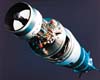 Sunnyvale CA (SPX) May 21, 2008
Lockheed Martin has announced that its team has completed an important milestone for a key element of the U.S. Missile Defense Agency's Multiple Kill Vehicle-L (MKV-L) payload by successfully calibrating an operational pathfinder seeker for the carrier vehicle at the Space Dynamics Laboratory in North Logan, Utah. |
|
|

| The content herein, unless otherwise known to be public domain, are Copyright 1995-2007 - SpaceDaily.AFP and UPI Wire Stories are copyright Agence France-Presse and United Press International. ESA Portal Reports are copyright European Space Agency. All NASA sourced material is public domain. Additional copyrights may apply in whole or part to other bona fide parties. Advertising does not imply endorsement,agreement or approval of any opinions, statements or information provided by SpaceDaily on any Web page published or hosted by SpaceDaily. Privacy Statement |

 del.icio.us
 Digg
Digg Reddit
 YahooMyWeb
 Google
 Facebook